

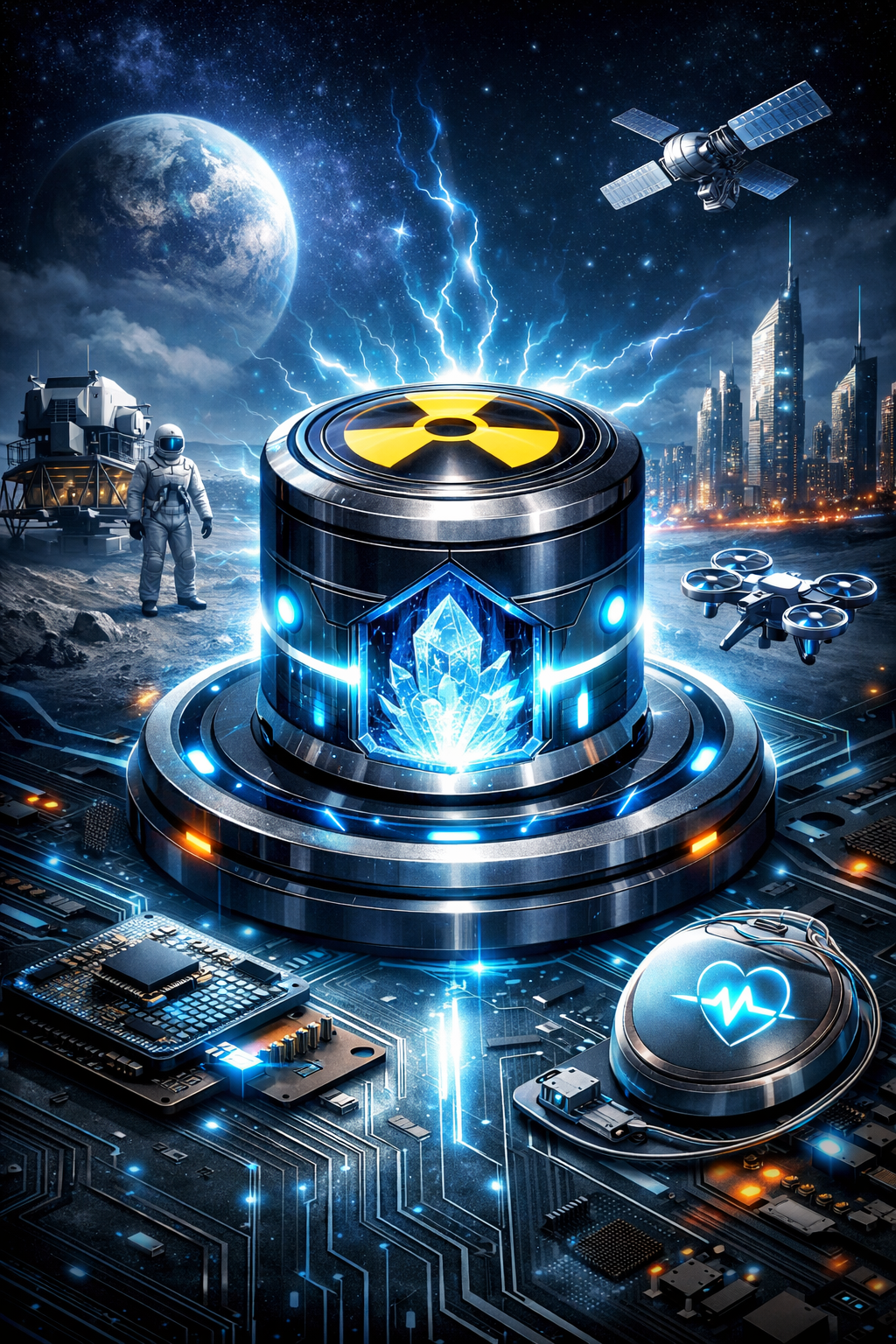
The idea of a device that can run for decades without ever being recharged has always sounded like science fiction. But recent advances in betavoltaic technology are accelerating a shift that could completely redefine consumer electronics, medical devices, space exploration, and even the Internet of Things.
Today, the so‑called long‑life nuclear battery is no longer an experimental concept—it’s a real technology, actively under development, with the first commercial models already entering production.
🔋 What a Nuclear Battery Really Is (and Why It’s Nothing Like a Reactor)
The term “nuclear battery” can sound alarming, but the technology behind these cells is surprisingly safe. These batteries don’t store energy—they generate it continuously through the controlled decay of radioactive isotopes that emit beta particles, which are then converted directly into electricity.
Unlike nuclear reactors:
- They don’t produce significant heat
- They cannot explode
- They don’t require heavy shielding
- They don’t release harmful radiation
Certain isotopes—such as carbon‑14 or nickel‑63—can be safely contained using thin semiconductor layers.
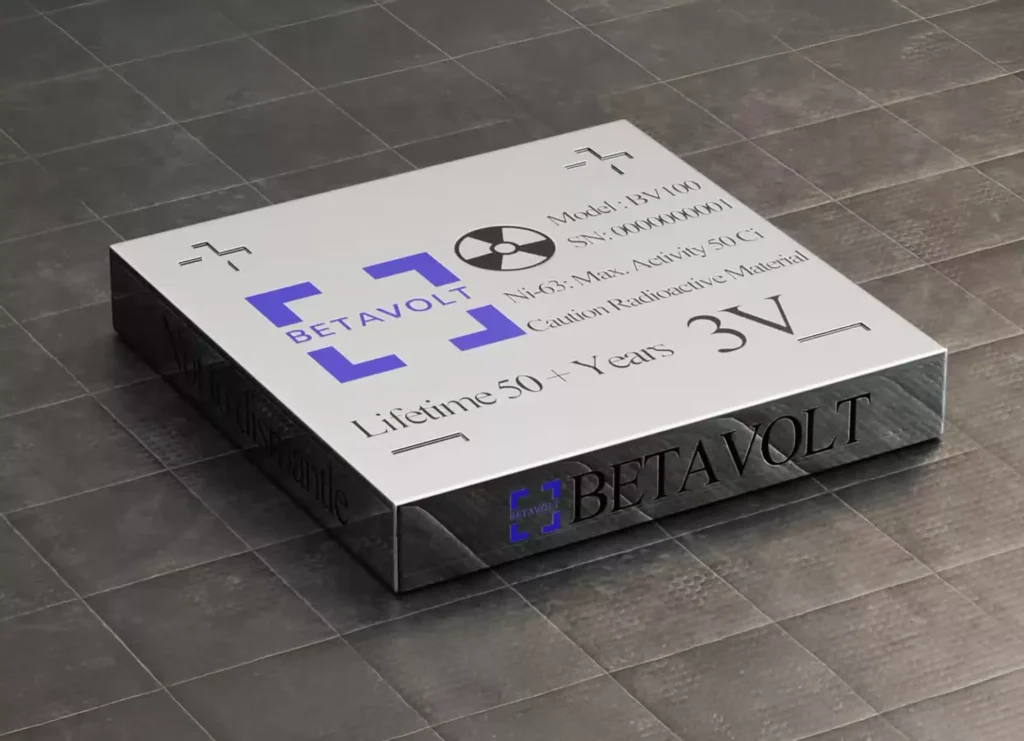
The result is a power source that is stable, clean, maintenance‑free, and capable of lasting more than 50 years.
🚀 A Breakthrough No One Saw Coming: Efficiency Increased Sixfold
A research team in Asia recently achieved a major milestone: a conversion efficiency of 10.79%, a record that multiplies previous values by six.
This leap was made possible thanks to:
- New perovskite crystal‑growth techniques
- Reduced internal defects that previously caused electron losses
- The use of additives like MACl and more precise antisolvent processes
These improvements allow electrons generated by radiation to travel with fewer losses, boosting both efficiency and long‑term stability.
🏭 China Begins Manufacturing a Commercial Nuclear Battery
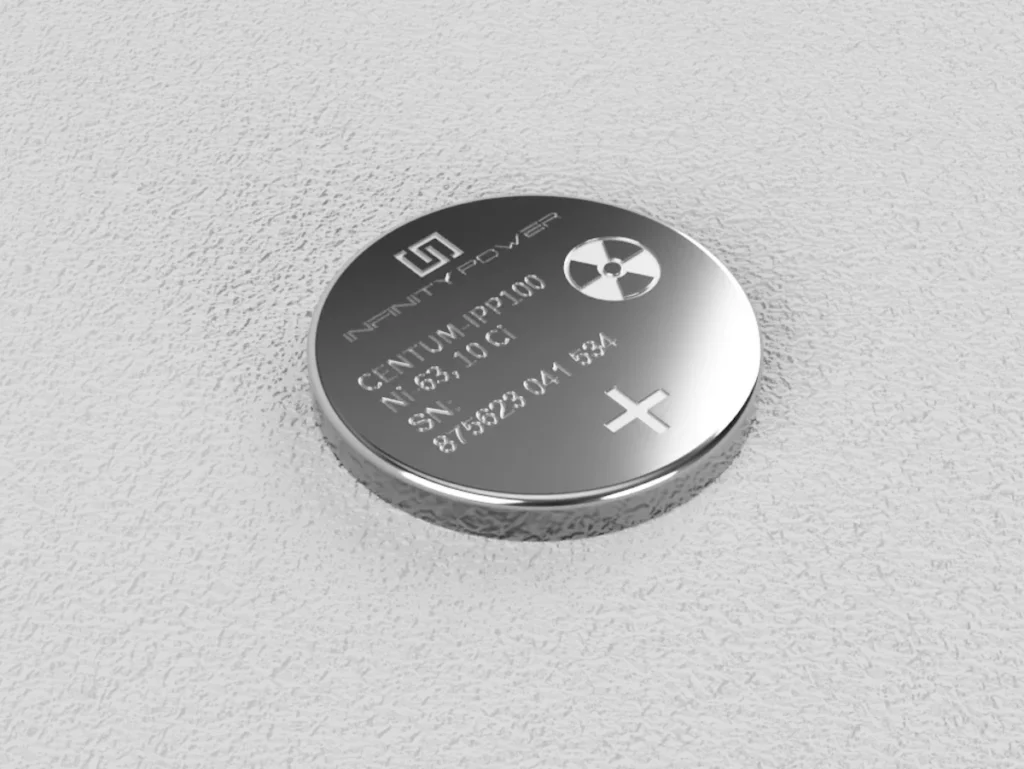
While laboratories push efficiency forward, a tech company in Asia has already begun mass‑producing a coin‑sized nuclear battery capable of operating 50 years without recharging or maintenance.
Key features include:
- Nickel‑63 as the radioactive source
- Fourth‑generation diamond semiconductors
- 100 microwatts at 3V
- Operating range from –60 °C to +120 °C
- Zero risk of fire or explosion
Although its current power output isn’t enough for a smartphone, it can easily power sensors, IoT devices, pacemakers, drones, and systems that require constant, ultra‑low‑power energy.
🌍 A Market That’s Just Beginning to Wake Up
The global nuclear battery market is valued at over $96 billion and is projected to surpass $178 billion by 2034.
Industries showing the most interest include:
- Implantable medical devices
- Remote sensors and industrial IoT
- Satellites and space exploration
- Distributed artificial intelligence
- Military and rescue equipment
The reason is simple: periodic recharging is a problem, and these batteries eliminate it entirely.
🔮 What This Means for the Future
If efficiency continues to improve and production costs drop, we could soon see:
- Smartphones that run for years without charging
- Drones with virtually infinite flight time
- Environmental sensors that operate for decades
- Safer, longer‑lasting medical implants
- Consumer electronics without chargers or replaceable batteries
The charger in your backpack might soon become a relic of the past.
🧩 Conclusion
The long‑life nuclear battery is not a futuristic promise—it’s a real technology advancing faster than expected. With improvements in materials, manufacturing processes, and efficiency, we may be witnessing the beginning of an energy revolution that could transform how we design, use, and maintain our devices.
At Cristosoft, we’ll continue monitoring this evolution closely, because what looks like a lab breakthrough today could be powering your next gadget tomorrow.