
For years, biomechanical analysis in golf was reserved for elite academies equipped with laboratories, force platforms, and high-speed cameras.
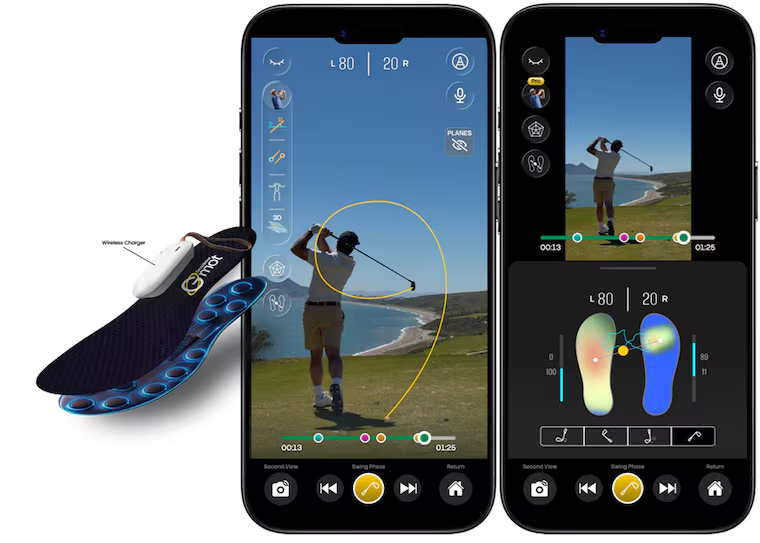
Today, that reality has changed. Technologies like OmniGmot Golfer and OmniGmot Smart Insoles allow any golfer—from amateur to competitive—to capture advanced motion data and have an expert turn it into measurable improvements.
The revolution isn’t just in the swing; it’s in understanding how the body moves.
1. OmniGmot Golfer: Swing Analysis from the Ground Up
OmniGmot Golfer uses sensors placed in the shoes to measure:
- Pressure distribution on each foot
- Weight transfer during backswing and downswing
- Stability and balance
- Motion sequencing
- Rhythm and timing
These metrics are displayed in real time through intuitive visuals: heat maps, pressure curves, and force lines.
Why It Matters for Golfers
Many swing errors are invisible to the naked eye:
- Late weight transfer
- Excess pressure on heel or toe
- Loss of stability at impact
- Insufficient load during backswing
OmniGmot enables instructors to detect hidden patterns and translate them into precise corrections.
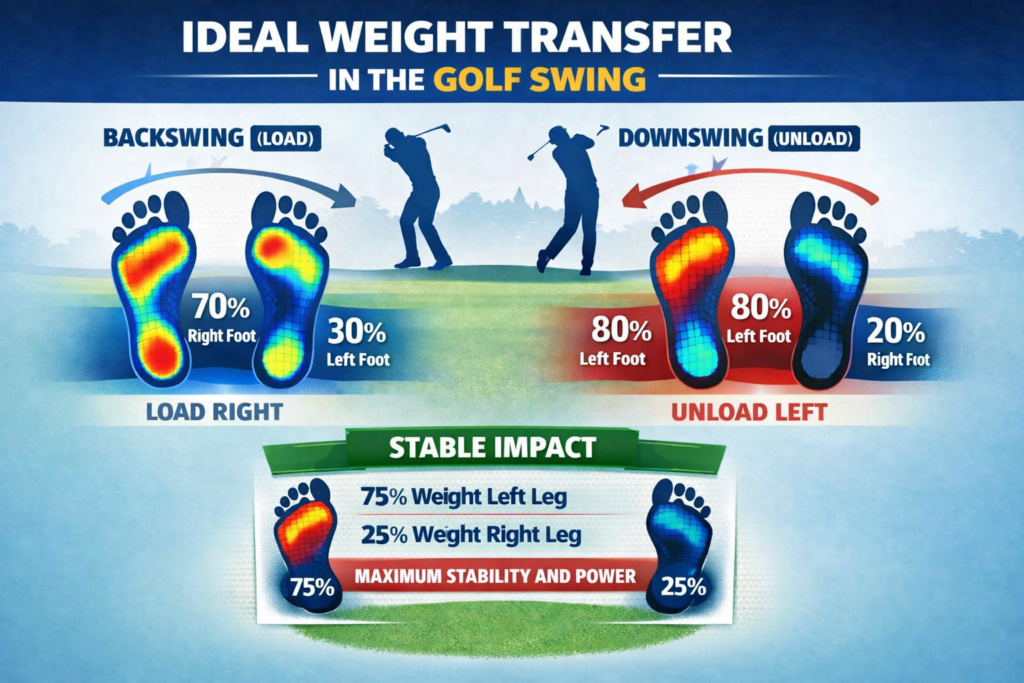
Infographic: Ideal Weight Transfer in an Efficient Swing
(Use the visual showing pressure distribution and balance between feet during backswing, downswing, and impact.)
2. OmniGmot Smart Insoles: Full Biomechanics for Walking, Running, and Training
These smart insoles measure:
- Plantar pressure
- Center of gravity
- Speed and cadence
- Foot symmetry
- Movement efficiency
Although not golf-specific, they provide critical insights:
- How the golfer walks during a round
- Accumulated fatigue
- Muscular imbalances
- Risk of injury
- Overall stability
A golfer with poor walking mechanics often shows stance instability, reduced power, and inconsistent performance.
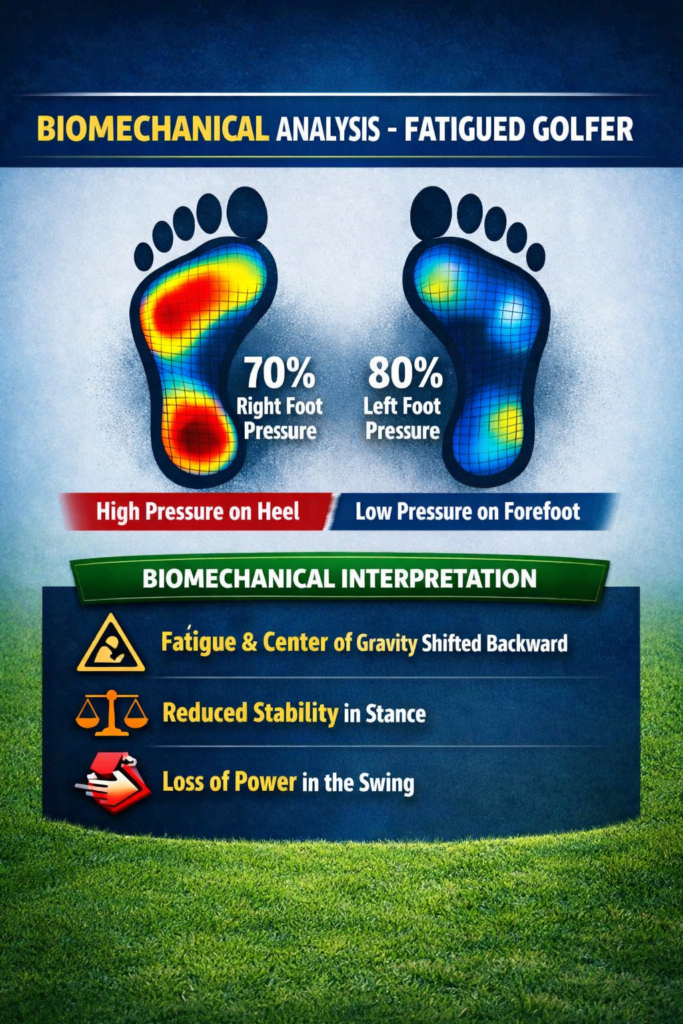
Infographic: Typical Pressure Map in a Fatigued Golfer
(Use the visual showing red/blue pressure zones and biomechanical interpretation.)
3. The Key Isn’t the Sensor — It’s the Expert Analysis
Sensors capture data.
Experts turn it into performance.
A trained instructor can:
- Interpret pressure and force patterns
- Relate them to swing flaws
- Design personalized drills
- Track progress with objective data
- Build evidence-based training plans
This transforms the golfer into an athlete who understands their body, not just their technique.
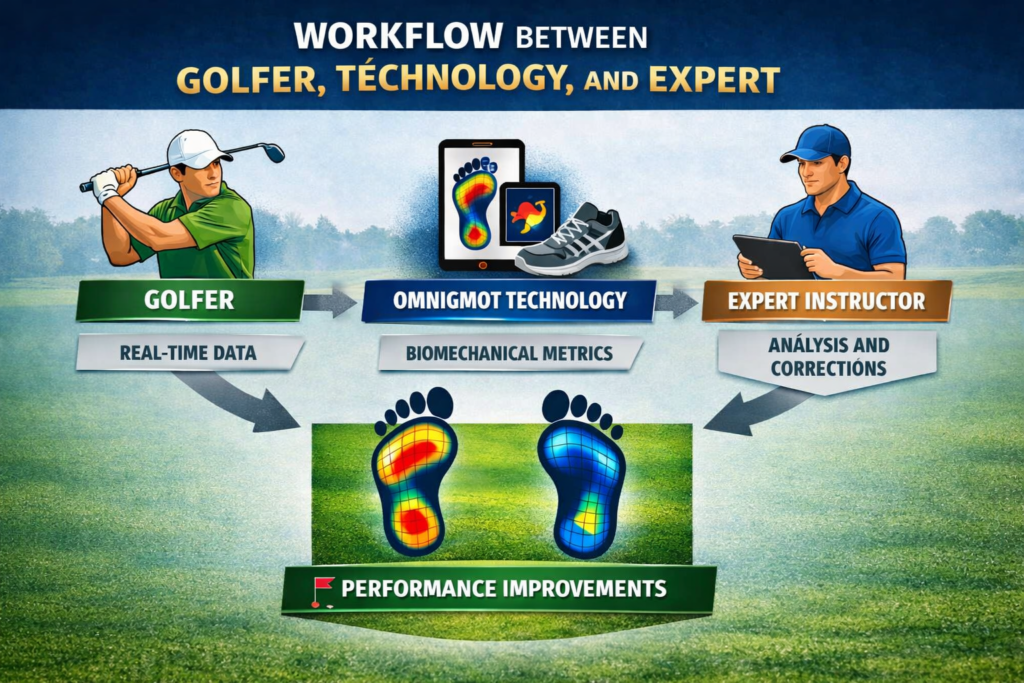
Diagram: Ideal Workflow Between Golfer, Technology, and Expert
(Use the visual showing the data flow from golfer → OmniGmot → instructor → measurable improvements.)
4. Direct Benefits for Golfers
- More power through better weight transfer
- Greater consistency at impact
- Improved balance and stability
- Reduced risk of overuse injuries
- Instant, visual feedback
- More efficient, personalized training
5. Why These Technologies Are Perfect for Academies and Clubs
- Accessible: No need for expensive labs
- Portable: Works on the course, not just indoors
- Visual: Golfers understand their errors by seeing them
- Measurable: Enables progress tracking over time
- Compatible: Fits any teaching methodology
For academies of Golf, integrating these tools into lessons, clinics, and performance programs creates a premium, data-driven experience for students.
Conclusion
OmniGmot democratizes biomechanics.
Sensors capture data.
Experts transform it into performance.
The future of golf isn’t just about the swing—it’s about understanding how the body moves.
And today, every golfer can access that insight.